
KEY EXPLOITABLE RESULTS
RELIANCE has successfully designed, developed and validated a new generation of smart-response, self-disinfecting, sustainable antimicrobial nanocoating solutions addressing the growing industrial and societal demand for safer, more durable and environmentally responsible surface technologies. By combining bio-based active agents, controlled-release nanostructures and application-specific coating deposition technologies, the project has delivered a coherent innovation pipeline spanning materials development, formulation, validation and end-use integration.
On this page, we are presenting the six Key Exploitable Results (KERs) that the consortium identified as having strongest market potential upon project’s conclusion in May 2026.
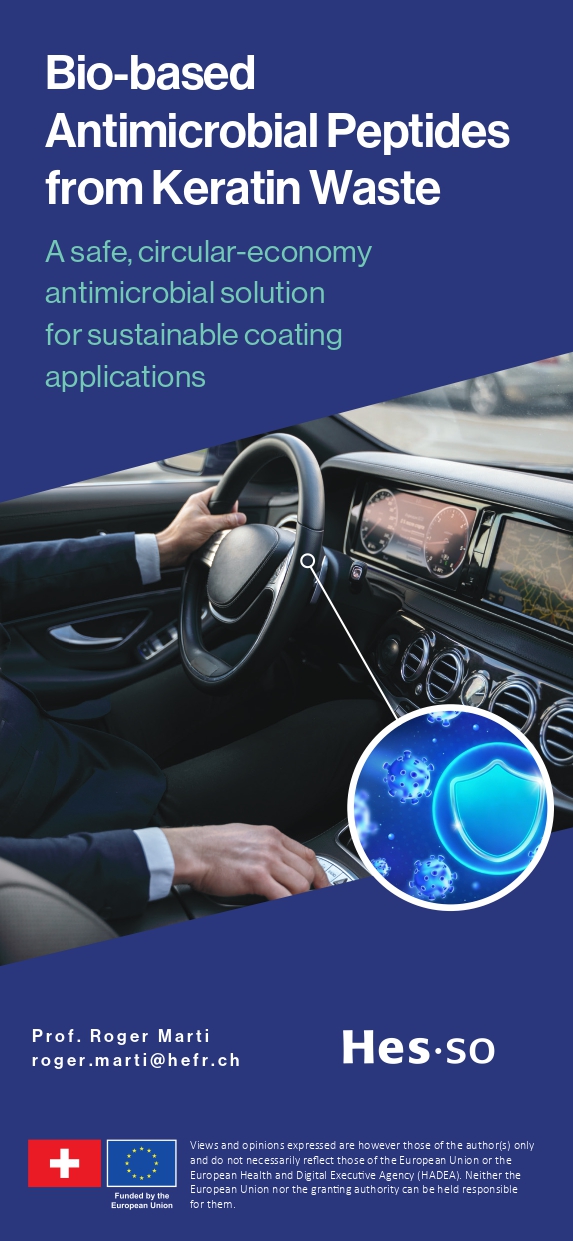
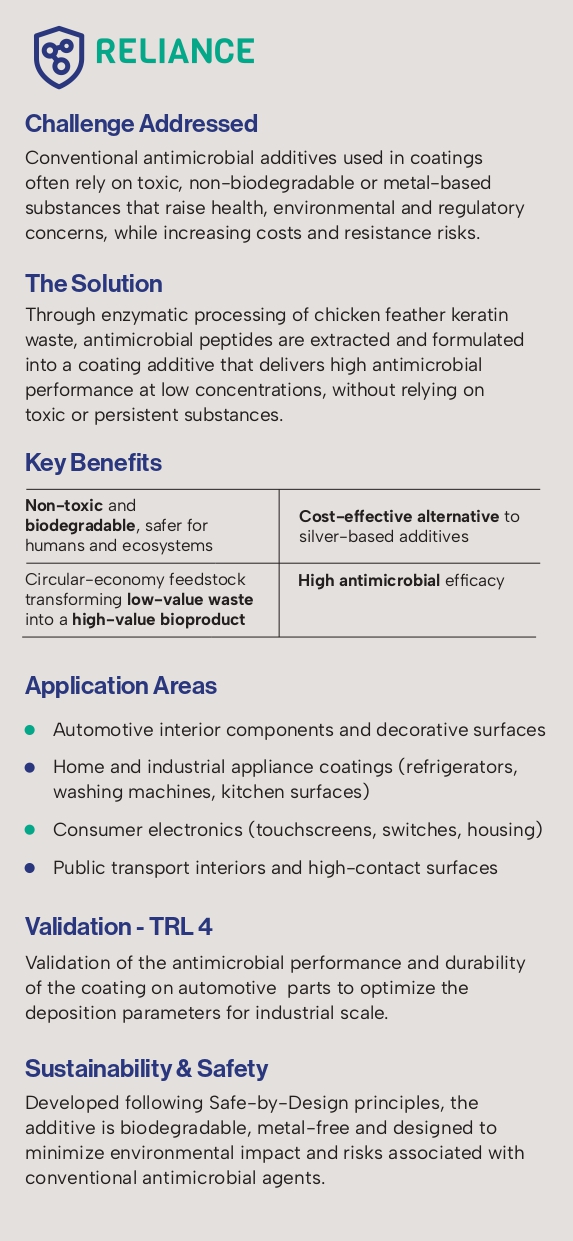
Antimicrobial peptides from keratin waste - lead beneficiary HES-SO
A new, nature-inspired antimicrobial solution made from keratin proteins extracted from chicken feathers - an abundant, low-value byproduct from the poultry industry.
These proteins are processed into short bioactive peptides that can destroy bacteria and viruses when directly deposited as a thin coating on plastic or metal surfaces through cold atmospheric plasma. This application method is a clean and dry process that does not require solvents or high temperatures, allowing for precise, uniform coverage and easy integration into existing industrial production lines.
Together with Molecular Plasma Group and MAIER, HES-SO will demonstrate how this plasma-assisted nanocoating can be used on chrome-plated components in shared vehicles, offering long-lasting antimicrobial protection without toxic additives or heavy metals.
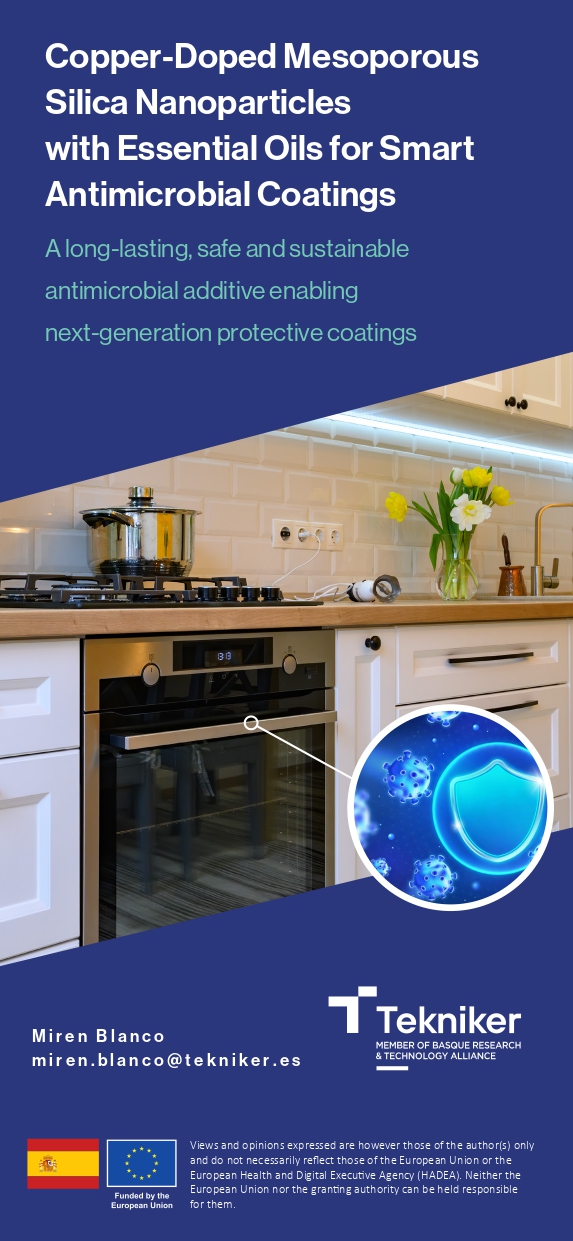
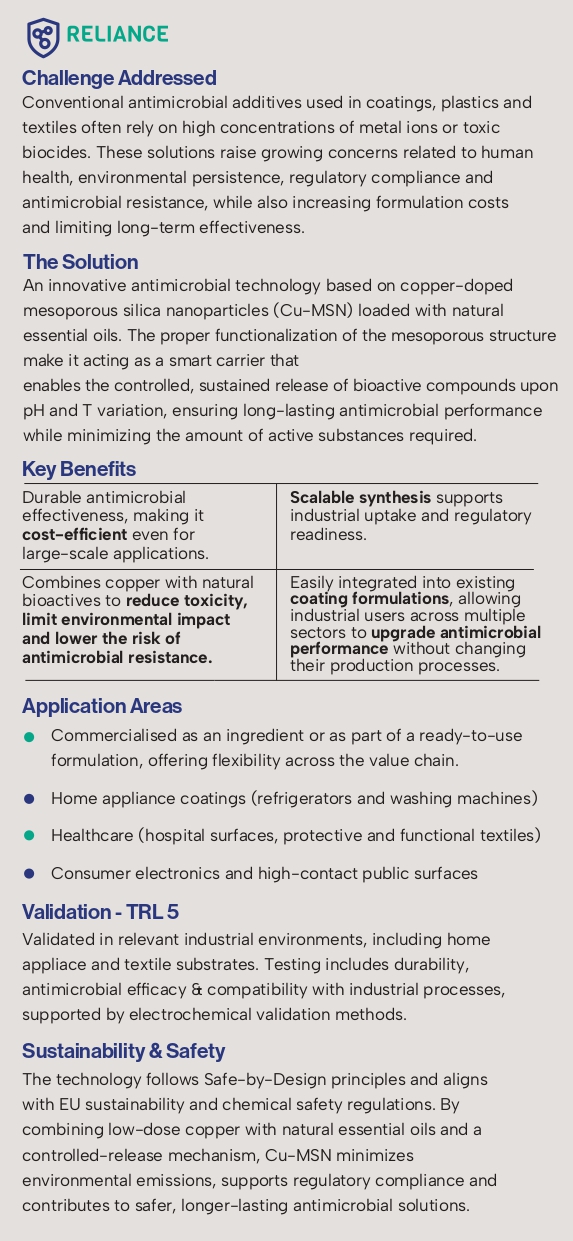
Innovative Copper-Doped Mesoporous Silica Nanoparticles (Cu-MSN) with Smart Release of Essential Oils - lead beneficiary Fundación Tekniker
A new class of copper-doped mesoporous silica nanoparticles (Cu-MSN) with smart release of essential oils that offers a safer and more sustainable way to protect surfaces from harmful microbes, without the drawbacks of traditional antimicrobial additives.
The technology uses specifically designed nanoparticles that gradually release natural essential oils. The innovation lies in the controlled release system in response to changes in the pH or Temperature and ensures long-lasting antimicrobial protection while avoiding the toxicity and environmental concerns often associated with metal-based solutions.
Antimicrobial textile finish – lead beneficiary Centexbel
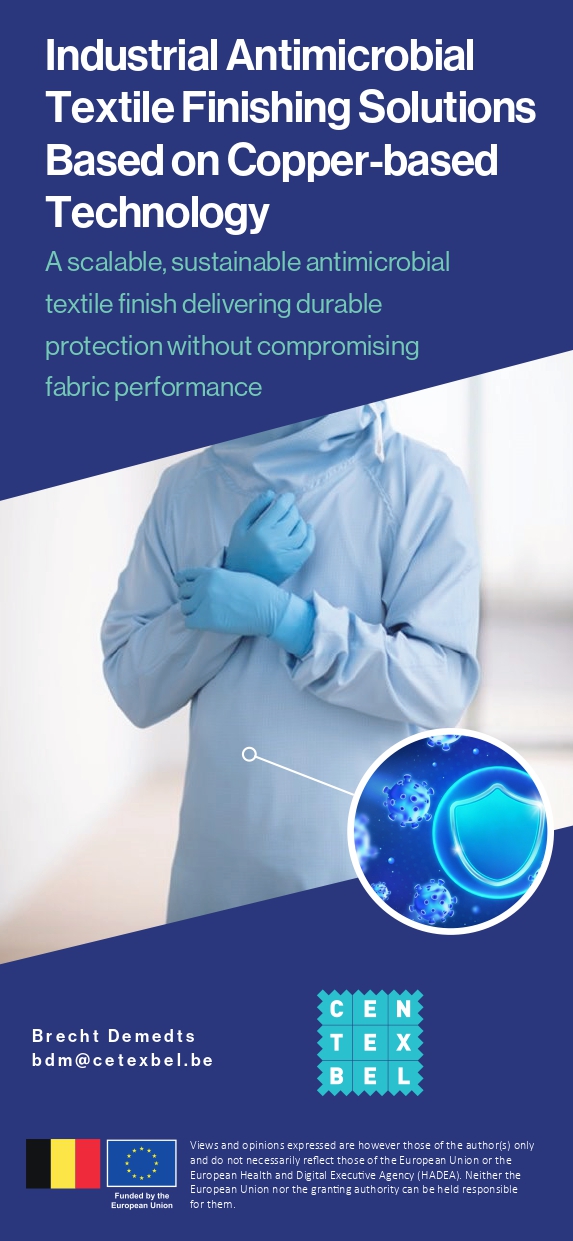
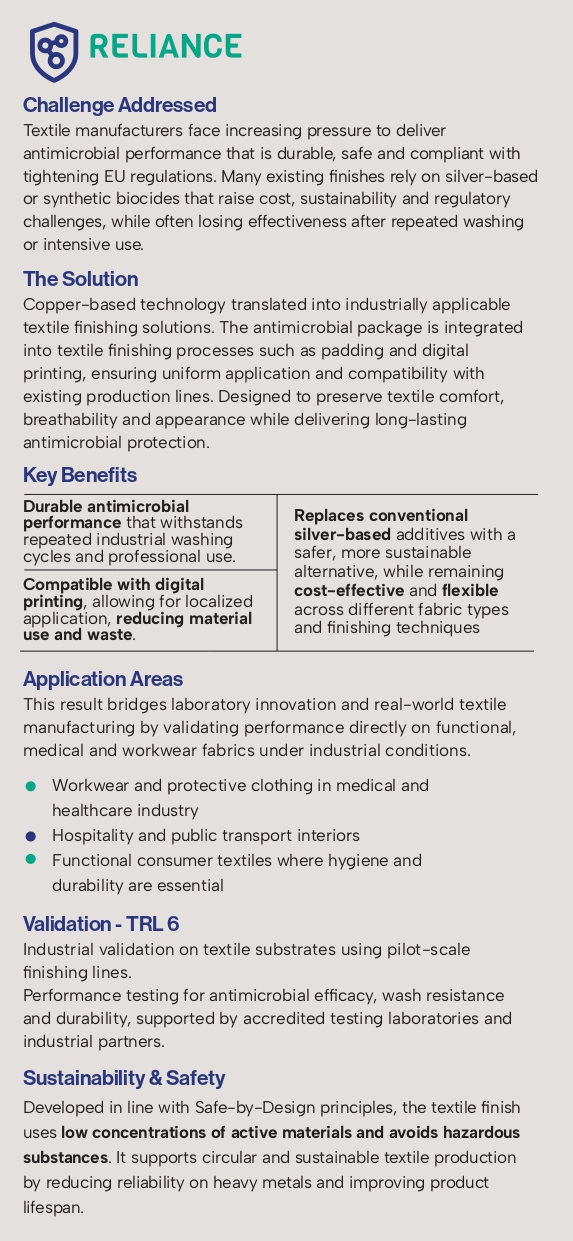
A next-generation antimicrobial textile finish that responds to the increasing need for safer, more sustainable, and regulatory-compliant antimicrobial solutions in textiles.
Unlike conventional systems that rely heavily on silver or heavy-metal additives, this finish combines natural and advanced components to deliver broad-spectrum microbial protection while remaining cost-effective and environmentally responsible.
Core value – the combined mode of action:
- Essential oils for natural antimicrobial action
- Copper-doped mesoporous nanoparticles (Cu-SMIN) for controlled, long-lasting release
- A biobased binder that supports sustainable, eco-friendly formulation
- Chitosan, a natural biopolymer, acting as a performance booster
- Flexible application via both padding (full-surface coverage) and digital printing (localized, design-driven functionalization)
This multi-mode strategy ensures protection against Gram-positive and Gram-negative bacteria, fungi, yeasts and viruses meeting the highest cleanliness standards without relying on costly or environmentally harmful chemicals.
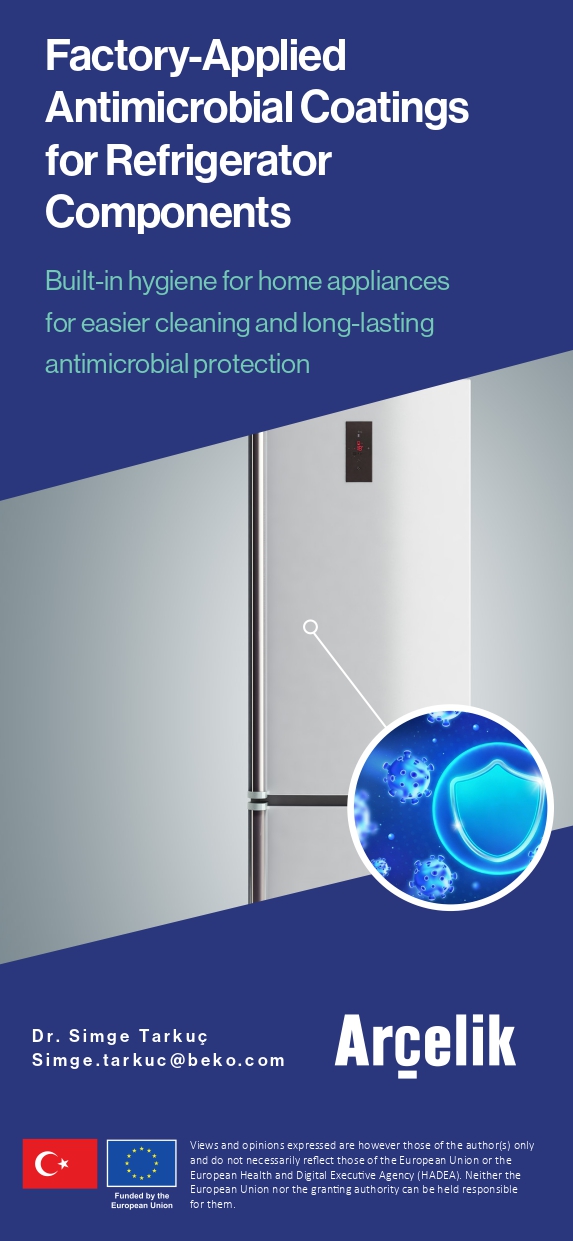
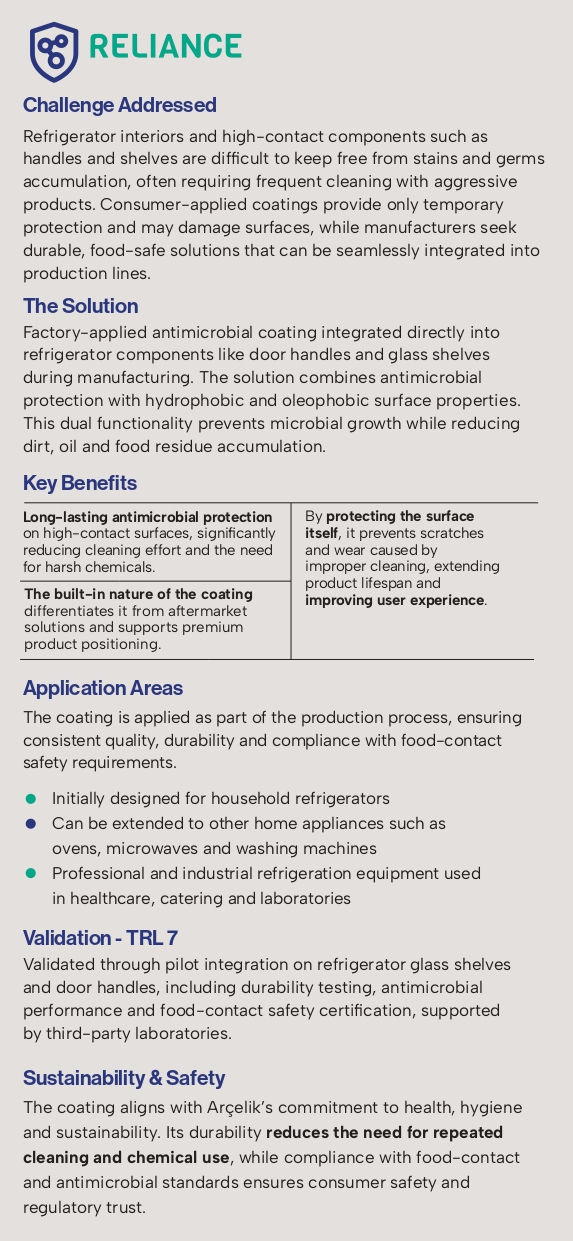
New Antimicrobial Coated Components of Home and Industrial Appliances - lead beneficiary Arçelik A.Ş.
New antimicrobial coated components offer a durable and long-lasting hygiene feature for home and industrial appliances, addressing one of the most persistent user concerns: keeping frequently touched and difficult-to-clean surfaces safe, clean and visually intact.
How does this factory-applied, built into the product coating differs from temporary spray-on coatings applied by consumers:
- Durable antimicrobial protection on high-contact areas such as refrigerator door handles and interior glass shelves.
- Hydrophobic and oleophobic performance, extending cleanliness and reducing the need for frequent scrubbing.
- Protection of the appliance surface, preventing scratches and abrasion caused by inappropriate cleaning tools.
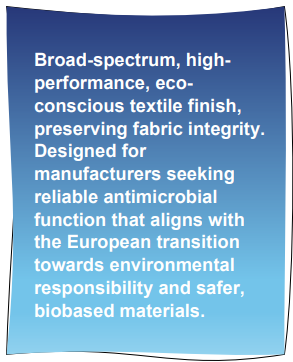
- Improved user experience, especially in households where hygiene and health risks are a concern. Broad-spectrum, high- performance, eco- conscious textile finish, preserving fabric integrity. Designed for manufacturers seeking reliable antimicrobial function that aligns with the European transition towards environmental responsibility and safer,
New Antimicrobial Inorganic Coating - lead beneficiary Polyrise
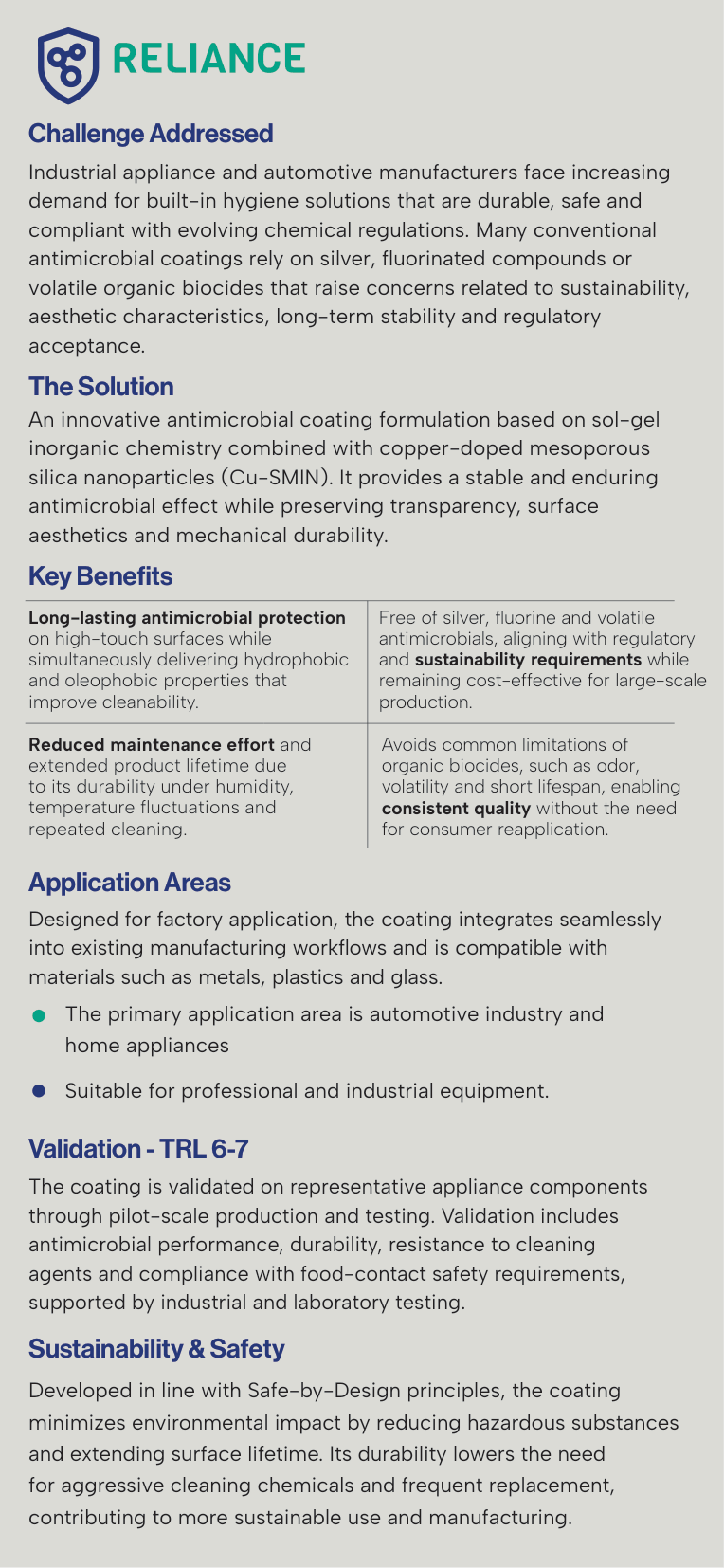
The formulation is based on sol-gel inorganic chemistry, combined with copper-doped mesoporous nanoparticles (Cu-MSN) produced by Tekniker. This novel solution provides a stable, enduring antimicrobial effect without compromising translucency or durability.
Core value for appliance manufacturers:
- Factory-applied environmentally responsible solution, ensuring consistent quality and no need for consumer reapplication
- Inhibits microbial growth on high-touch surfaces
- Hydrophobic and oleophobic performance
- Durable and stable, resistant to humidity, temperature, and cleaning agents - tested on appliance components such as door handles and shelves.
- Highly compatible with appliance materials - metals, plastics and glass
This combination delivers a stable, high-performance antimicrobial effect that avoids many limitations of organic biocides, such as volatility, odor or short lifespan.

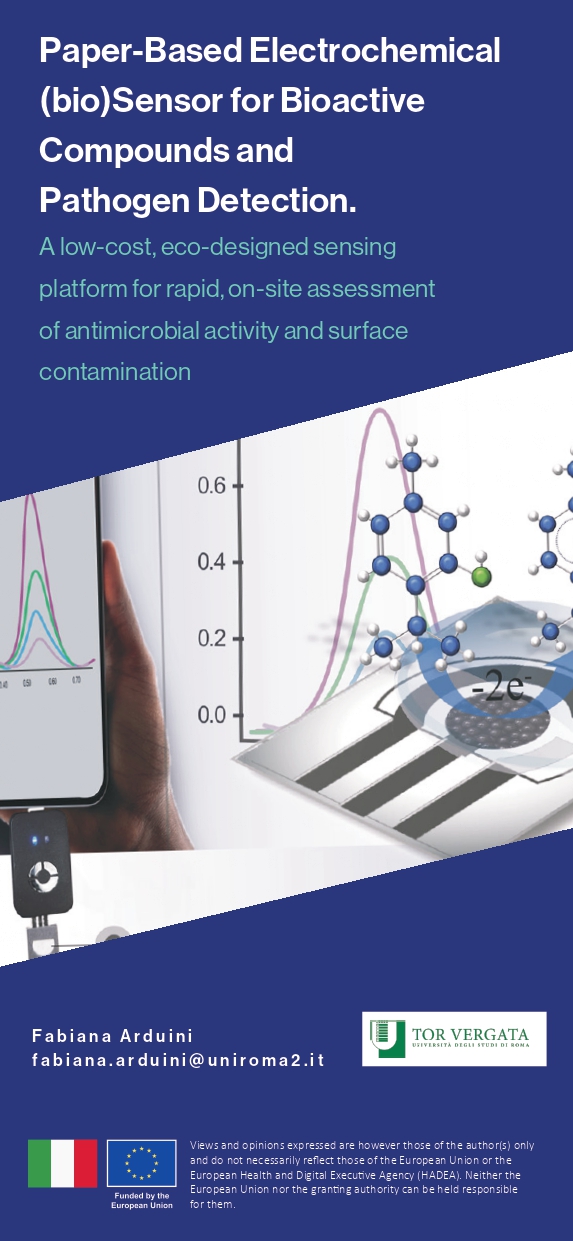
Paper-Based Electrochemical (Bio)Sensors for Essential Oils and Pathogen Detection - lead beneficiary University of Rome Tor Vergata
Innovative portable diagnostic tool developed by the University of Rome “Tor Vergata”, designed for rapid, low-cost and on-site detection of essential oils’ (EOs) antimicrobial activity and, in parallel, for measuring SARS-CoV-2 presence on surfaces, thus demonstrating its flexibility and applicability to real-world antimicrobial and antiviral monitoring.
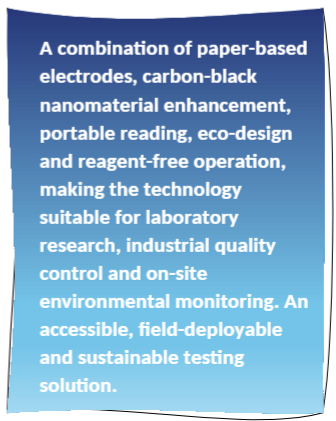
The device uses paper-based screen-printed electrodes, with working electrode functionalised with carbon black nanomaterials to significantly enhance electron transfer and sensitivity. Paper substrates are chosen for their eco-sustainability, low cost and ability to reduce non-specific adsorption, improving the signal-to-noise ratio after washing. Paper also enables preloading of buffers and reagents, making the sensor easy to use and disposable.
Capable of quantifying:
- Essential oils and bioactive compounds responsible for antimicrobial activity, and
- Pathogens on surfaces, demonstrated through a prototype immunosensor detecting SARS-CoV-
A dual capability analytical tool allowing for simple detection of EO-based antimicrobial activity across liquids, gases, surfaces and aerosols. Compatible with portable instrumentation and enabling field testing.
Follow us:


Views and opinions expressed are however those of the author(s) only and do not necessarily reflect those of the European Union or the European Health and Digital Executive Agency (HADEA). Neither the European Union nor the granting authority can be held responsible for them.
© All Rights Reserved 2025 | Reliance-HE
Designed and Developed by Europroject