

August 31, 2026
RELIANCE reaches the end of its journey – and opens the way for what comes next

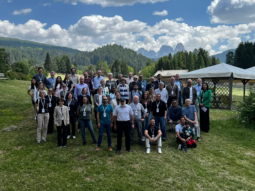
After more than four years of research, testing and collaboration across Europe, RELIANCE partners came together on 27 August for its final consortium meeting. It offered an opportunity to look back at the project’s achievements, take stock of what has been learned and, importantly, look ahead to how its results can continue to make use beyond the project.
RELIANCE officially concludes on 31 August 2026, bringing to a close a 51-month research and innovation journey focused on a challenging ambition: developing smarter and more sustainable antimicrobial nanocoatings for healthier environments.
The final discussions showed that RELIANCE has moved well beyond the initial concept. A portfolio of materials, coating formulations, application technologies, paper based electrochemical sensors and scientific knowledge has been developed and tested across different use cases. At the same time, the project has provided a clearer picture of what works, what needs further work and where the greatest opportunities for future uptake lie.
From laboratory research towards real-world applications
One of the most important developments during the final phase has been the move from laboratory experiments towards application-oriented testing.
RELIANCE coating formulations have been applied and assessed under conditions increasingly representative of industrial environments, including on surfaces relevant to the automotive and home-appliance sectors, as well as in protective medical textiles.
The results confirmed that the developed coatings can provide several of the characteristics required for practical use: they can adhere effectively to surfaces, provide water-repellent properties and make surfaces easier to clean. The work also demonstrated that the application process can be adapted to industrial settings.
At the same time, the research highlighted areas where further optimisation is needed, particularly in ensuring that antimicrobial components are distributed consistently throughout the coating. These findings are an important part of the project’s legacy: understanding not only the potential of a technology, but also the conditions that need to be met before it can confidently move towards wider deployment.
A clearer picture of antimicrobial performance
RELIANCE investigated a broad range of materials and formulations to understand how effectively they could combat different types of microorganisms.
The research identified promising antibacterial performance for selected formulations, while also showing that effectiveness depends strongly on the combination of active ingredients, their formulation and the intended application.
The project also explored antifungal and antiviral properties. Here, the results were more varied, providing valuable insight into which approaches show potential and which require further elaboration.
In the textile application, for example, the tests demonstrated meaningful antimicrobial activity, while also revealing challenges around maintaining that activity after washing. Rather than being a limitation of the project, these findings point directly towards the next research questions, and a follow-up effort is already underway to improve durability.
The antiviral investigations likewise produced encouraging indications for selected bio-based formulations, while highlighting the need for further testing to establish their performance more robustly.
Together, these results contribute to a much more detailed understanding of how smart, bio-based antimicrobial approaches can be tailored to different surfaces and applications.
Another distinctive thread of RELIANCE has been the development of sensing technologies designed to help understand what happens within a smart coating.
The project developed paper based electrochemical sensors capable of detecting the release of bioactive compounds and detecting viral material on surfaces. The latter was successfully tested with real viral samples under controlled laboratory conditions.
The tests confirmed that the release of an active compound can be controlled by environmental conditions such as changes in the pH. This is particularly relevant to the RELIANCE concept of a “smart response” coating, one that does not simply contain an antimicrobial substance but can respond to its surroundings.
These developments open interesting possibilities for future research into monitoring, controlled release and more responsive antimicrobial surfaces.
Safety and sustainability built into the development process
Performance alone is not enough for a technology intended for widespread use. RELIANCE therefore assessed its materials and coatings from both a human health and environmental perspective.
The safety studies provided encouraging results for several of the tested formulations, while also identifying combinations that require further investigation. The work has therefore helped establish both the safety profile of the developed materials and the additional evidence that would be needed on the path towards market uptake.
Environmental testing showed that the developed materials generally have low environmental toxicity, while studies of coated surfaces found no significant release of nanoparticles or copper into the surrounding water under the conditions tested.
From research results to opportunities for exploitation
As RELIANCE reaches completion, attention is increasingly turning from what has been developed to what can happen with these results next.
The project’s exploitation work has evolved alongside the technology. What began with a small number of promising Key Exploitable Results has developed into a broader portfolio covering six key results, supported by business planning, market considerations, risk assessment and activities designed to help partners take the results further.
The project has identified different possible pathways depending on the maturity and nature of each result, from further research and development, and industrial integration to potential commercialization, knowledge transfer and future collaborative opportunities.
This is an important transition for RELIANCE as the project does not present its results as a finished, universal solution to antimicrobial protection. Instead, it has established a portfolio of validated knowledge and technologies with different levels of maturity and different routes towards future uptake.
That distinction is especially relevant for industry and investors looking at the next stage of development.
Building a community around the results
RELIANCE has also invested in ensuring that its knowledge is not confined within the consortium.
Throughout the project, the partners built connections with sister projects, European initiatives, research networks and industry communities working on antimicrobial surfaces, advanced materials, nanosafety and sustainable innovation.
These relationships grew from information exchanges into concrete collaborations, including joint dissemination activities, shared events, conference participation and cross-communication. The result is a stronger European community around next-generation antimicrobial nanocoatings and a wider network through which RELIANCE results can continue making impact after the project ends.
The project’s communication and dissemination activities have helped bring this research beyond the specialist audiences.
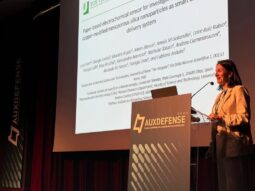
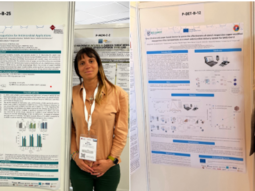
Over its lifetime, RELIANCE website grew from a modest initial audience to more than fifty thousand visitors, while its social media community reached several hundred followers. Scientific publications, conference presentations, newsletters, videos and other communication activities have progressively built visibility around the project and its results.
The most important shift, however, has been qualitative: as the project matured, communication moved from explaining what RELIANCE was going to do towards showing what it discovered and developed.
This final stage is also about ensuring that the knowledge remains accessible. The project’s website and digital channels will continue to serve as reference points for RELIANCE results beyond the formal end of the project, supporting continued dissemination, knowledge transfer and potential uptake.
The final consortium meeting was more than a look back at the past four years. It was a moment to recognize how far the project has progressed: from the development of innovative materials to application-oriented testing, safety and environmental assessment, and finally to concrete exploitation pathways.
RELIANCE has produced promising technologies, valuable evidence and, equally importantly, a clearer understanding of the challenges that still need to be addressed.
RELIANCE results will continue to provide a foundation for further research, industrial development and knowledge transfer. The next chapter belongs to the partners, researchers, companies and wider advanced materials community who can step on these results and bring the antimicrobial innovation further.

Follow us:


Views and opinions expressed are however those of the author(s) only and do not necessarily reflect those of the European Union or the European Health and Digital Executive Agency (HADEA). Neither the European Union nor the granting authority can be held responsible for them.
© All Rights Reserved 2025 | Reliance-HE
Designed and Developed by Europroject