
May 14, 2026
RELIANCE results presented at the International Symposium on Advanced Analytical Methods in Research & Industry 2026, Tunisia
Contributor: Fabiana Arduini, UNITOV
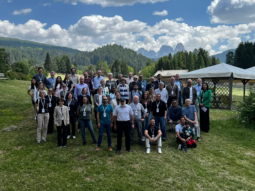
The International Symposium on Advanced Analytical Methods in Research and Industry (AAMRI) 2026 took place in Tunis, Tunisia, 27–28 April 2026. Researchers, industry professionals and innovators gathered to explore the latest breakthroughs and push the boundaries of what analytical chemistry can achieve across disciplines and real-world applications.
From the first sessions, it was clear that the symposium was designed not only to present results but to also spark dialogue. Plenary and keynote lectures set the tone, offering broad visions of where the field is heading, while invited talks, poster sessions and conversations on the sideline created space for detailed discussion and critical exchange. Topics spanned a wide scientific landscape, from advances in analytical chemistry and separation sciences to electroanalytical methods, sample preparation, sensors and emerging materials. What made the experience particularly engaging was the strong connection between fundamental research and application-driven innovation. Areas included pharmaceuticals, biomedicine, food safety, environmental monitoring and forensic toxicology, which were all part of a continuous narrative rather than isolated domains.
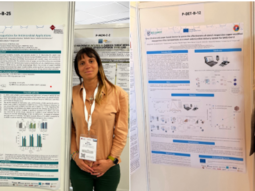
Walking through the poster sessions felt like navigating a living ecosystem of ideas. Conversations started spontaneously, often evolving into deeper technical discussions or outlining the first steps toward future collaborations.
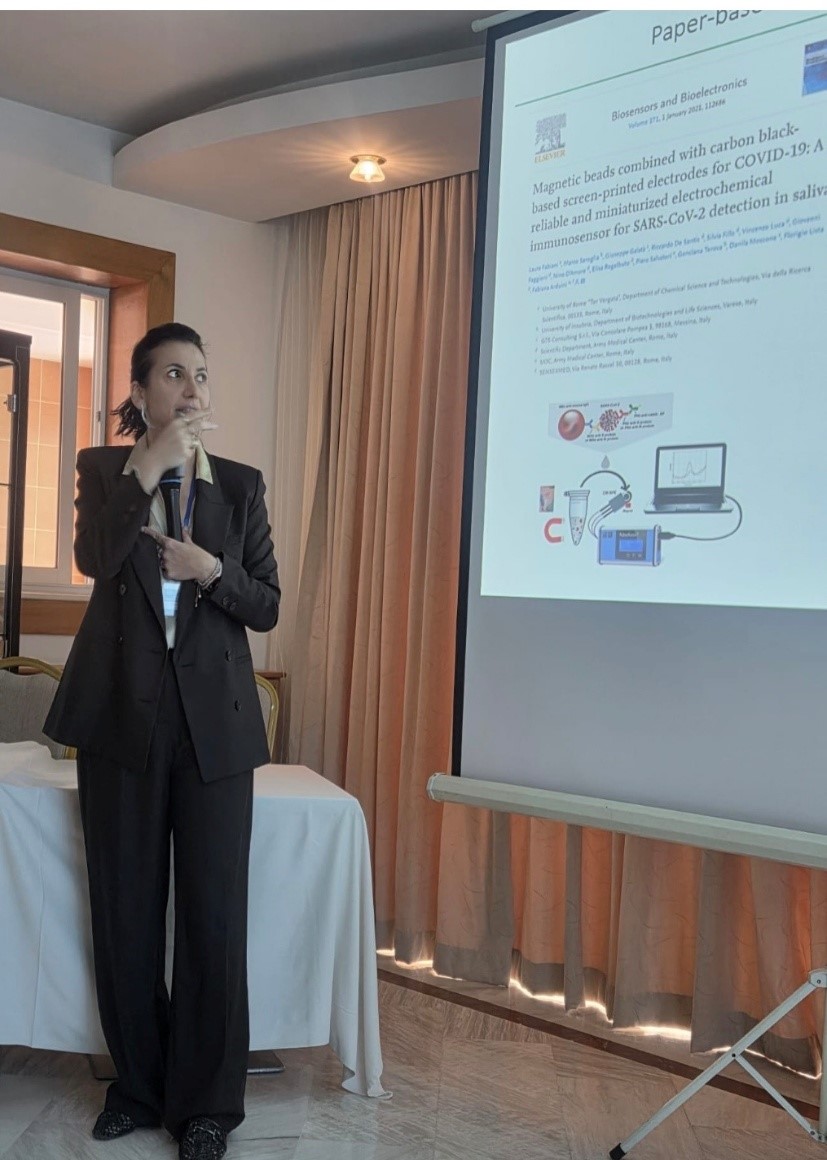
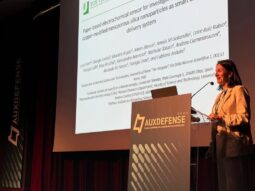
Within this dynamic context, Professor Fabiana Arduini’s invited plenary lecture offered an opportunity to contribute to the dialogue by focusing on the versatility of paper-based electrochemical (bio)sensors. Her goal wasn’t presenting simply results but illustrating how a seemingly simple material such as paper can be transformed into a powerful analytical platform. By combining sustainability, low cost and intrinsic capillary properties, paper enables the development of smart devices capable of operating across very different scenarios.
She presented examples that ranged from the detection of essential oils highlighting the reagent-free approach to more complex sensing challenges. In particular, she discussed paper-based electrochemical biosensors developed for SARS-CoV-2, showing how these devices can be employed to evaluate the effectiveness of antimicrobial coatings. This application resonated strongly with the audience, as it bridged fundamental biosensor design with urgent real-world needs, emphasizing rapid, on-site analysis and decentralized testing.
What emerged most clearly from both the presentations and informal discussions was a shared recognition: analytical science is moving towards more integrated, accessible and application-oriented solutions. Technologies are no longer confined to the laboratory but are increasingly designed to operate in real environments, addressing societal challenges directly.
As the symposium progressed, the initial exchange of ideas gradually transformed into something more tangible such as new collaborations, shared strategies and a collective sense of direction.
Follow us:


Views and opinions expressed are however those of the author(s) only and do not necessarily reflect those of the European Union or the European Health and Digital Executive Agency (HADEA). Neither the European Union nor the granting authority can be held responsible for them.
© All Rights Reserved 2025 | Reliance-HE
Designed and Developed by Europroject