
June 25, 2026
RELIANCE results showcased at the 7th International CBRNe Conference 2026 in France
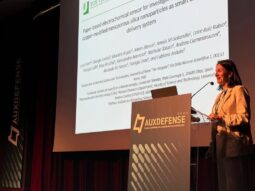
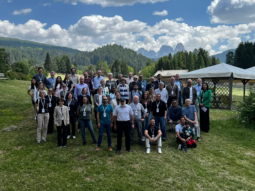
The University of Rome Tor Vergata team had the pleasure of attending the CBRNe Research & Innovation Conference in the beautiful coastal town of Arcachon, France from 19 to 21 May 2026 - an inspiring and enriching experience, both from a scientific and human perspective. Surrounded by researchers, PhD students, postdoctoral fellows, professors and professionals working in the field of chemical, biological, radiological, nuclear and explosive threats, they had the opportunity to share their work, exchange ideas and explore new perspectives for future collaborations. Despite the diversity of backgrounds and experience levels, everyone contributed in a meaningful way, creating an open and constructive environment. This mix of perspectives made the event especially dynamic and confirmed how valuable scientific dialogue can exist when based on mutual interest and respect.
The scientific program itself was equally engaging. They attended talks feeding attendees with new ideas and broadening perspectives on current challenges and innovative approaches in the CBRNE field. Listening to the presentations of other researchers was especially helpful, as it allowed them to identify methods, concepts, and experimental strategies that could be adapted or developed further in their own projects. In this sense, the congress was not only a place to present results, but also a place to learn, observe, and rethink future directions. The atmosphere was genuinely collaborative.
Another interesting part of the event was the series of demonstrations by the French armed forces. These practical sessions showed how scientific knowledge, operational readiness and technological innovation can come together in real-world scenarios. Seeing these demonstrations provided an even clearer sense of the broader impact of CBRNE research and the importance of cooperation between academia, institutions and operational bodies.
The town of Arcachon offered a beautiful setting for the conference. The combination of scientific exchange, stimulating discussions and the relaxed atmosphere of the city contributed to making the experience even more enjoyable and memorable.
Overall, the conference was an extremely positive and motivating experience, and a true reminder on how important collaboration, curiosity and open discussion are in scientific research. UNITOV team returned home with new ideas, new contacts and renewed enthusiasm for their work, looking forward to future opportunities to continue sharing and developing their research within the international scientific community.
The main topics that the conference addressed were:
- Detection – identification
- Protection – decontamination
- Medical countermeasures
- Risk and crisis management
UNITOV team reported the results obtained within RELIANCE in the following three areas:
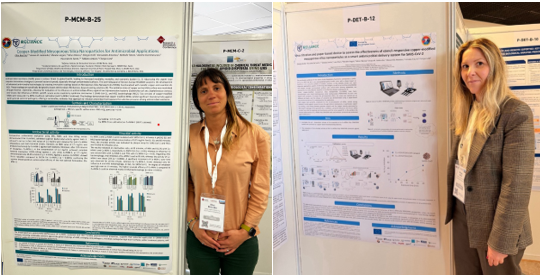
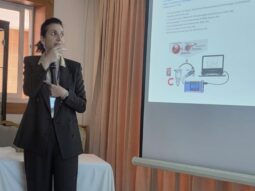
One poster presentation titled “Copper-Modified Mesoporous Silica Nanoparticles for Antimicrobial Applications”.
The poster presented a part of RELIANCE project dedicated to the development of copper-modified mesoporous silica nanoparticles for antimicrobial applications. The aim was to propose innovative and sustainable solutions to combat antimicrobial resistance, with potential applications in coatings for high-touch surfaces, water treatment systems, antiviral textiles and other protective devices.
The study compared two nanoparticle formulations: one non-calcined (Cu-MSN-1) and one calcined (Cu-MSN-2). The results show that the non-calcined formulation is the most effective against both the bacteria and viruses tested, in particular against E. coli and S. aureus, with faster and more complete bactericidal activity than the calcined formulation.
Regarding the virucidal activity, the nanoparticles showed good effectiveness against SARS-CoV-2, influenza A and MS2 bacteriophage, with generally better performance for Cu-MSN-1.
The work demonstrateed that copper modification of nanoparticles can produce materials with broad-spectrum antimicrobial activity and potential applications in CBRNe contexts and infection prevention.
A second poster named “Virus titration and paper-based device to assess the effectiveness of stimuli-responsive copper-modified mesoporous silica nanoparticles as a smart antimicrobial delivery system for SARS-CoV-2”,aimed to investigate the pH-dependent release of carvacrol in Cu-MSNs Poly DMAEMA loaded with the essential oil using a paper-based electrochemical device and the virucidal activity of the nanoparticles against SARS-CoV-2. To assess the pH-responsive effect, the study was carried out at different pH levels demonstrating that the release of carvacrol from Cu-MSNs-PDEAEMA occurred under low-pH conditions (pH<6), whereas the ability to trap the essential oil was observed when maintained at pH>9. Moreover, as regards the virucidal effectiveness of Cu-MSNs-Poly DMADEMA nanoparticles with and without carvacrol, it was evaluated against SARS-CoV-2. The nanoparticles without carvacrol showed virucidal activity below 50% at the highest time point tested (60 minutes), and comparing carvacrol-Cu-MSN-PDMAEMA a trend towards higher virucidal activity than Cu-MSN-PDMAEMA was observed, although the differences were not statistically significant (p>0.05, Welch test). By contrast, the virucidal effects of carvacrol-Cu-MSN-PDMAEMA increased gradually over time, with a trend from no virucidal activity after 15 minutes to the maximum value after 60 minutes, and this increase was statistically significant.
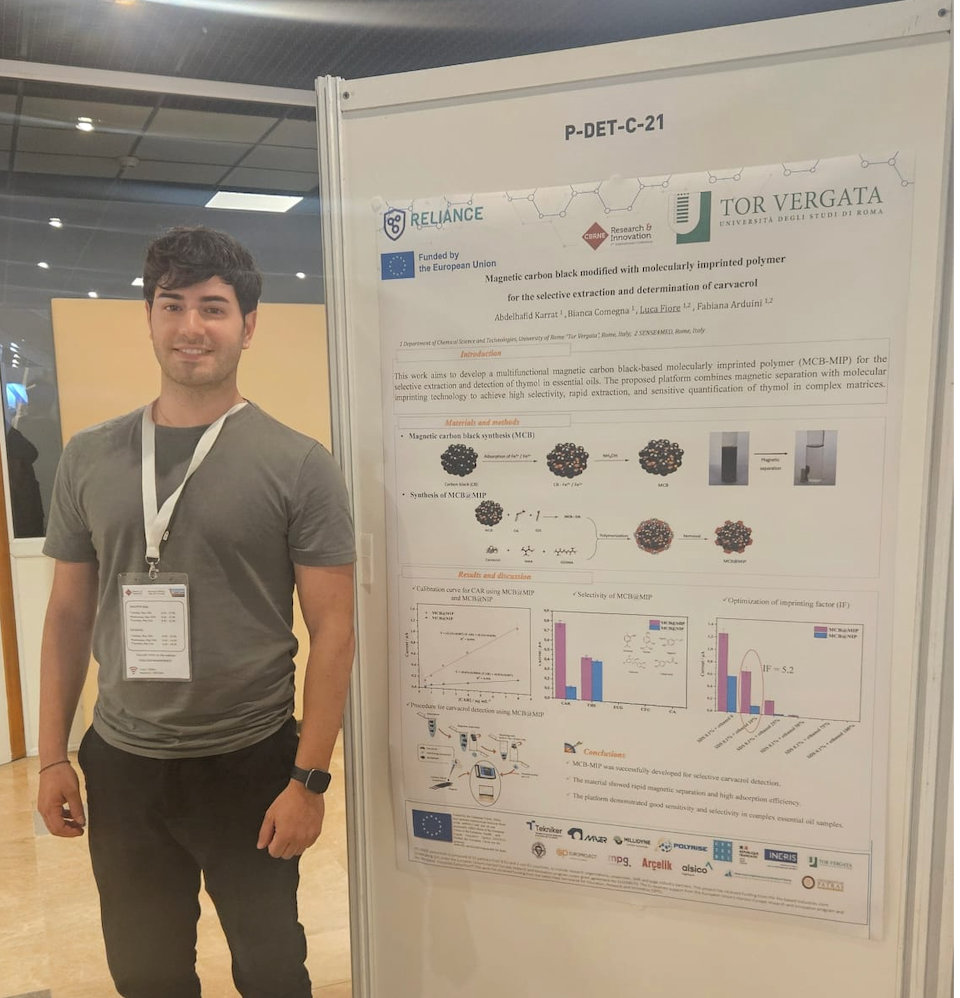
Lastly, a third poster, “Magnetic carbon black modified with molecularly imprinted polymer for the selective extraction and determination of thymol”, presented the development of an innovative analytical platform based on magnetic carbon black modified with a molecularly imprinted polymer (MCB-MIP) for the selective extraction and determination of thymol, one of the main bioactive compounds present in essential oils. Thymol is widely recognized for its antimicrobial and antioxidant properties; however, its selective determination in complex matrices remains a significant analytical challenge. The proposed material combines the high surface area, adsorption capacity, and electrical conductivity of carbon black with the magnetic properties of iron oxide nanoparticles, allowing rapid magnetic separation from complex samples. In addition, molecular imprinting technology was employed to create selective recognition sites specifically tailored to thymol molecules, enhancing both selectivity and binding affinity. The synergistic integration of magnetic separability and molecular recognition resulted in improved extraction efficiency, enhanced sensitivity and reliable quantification of thymol. The developed MCB-MIP platform demonstrated strong potential as a robust analytical tool for the determination of thymol in essential oils and other complex matrices. Overall, this work highlights the potential of combining magnetic nanomaterials and molecularly imprinted polymers to develop selective, rapid and efficient analytical systems for the characterization of bioactive compounds.
Find the posters here.
Follow us:


Views and opinions expressed are however those of the author(s) only and do not necessarily reflect those of the European Union or the European Health and Digital Executive Agency (HADEA). Neither the European Union nor the granting authority can be held responsible for them.
© All Rights Reserved 2025 | Reliance-HE
Designed and Developed by Europroject