Categories
News

Copper-Modified Mesoporous Silica Nanoparticles for Antimicrobial Applications

Authors: Amaia M. Goitandia, Maialen Argaiz, Miren Blanco, Giorgia Grilli, Elisa Recchia, Alessandra Amoroso, Nathalie Totaro, Andrea Ciammarucon, Riccardo De Santis, Leire Ruiz Rubio, Fabiana Arduini and Florigio Lista

Abstract

The escalating global crisis of antimicrobial-resistant (AMR) bacterial infections, along with the continuous threat of viral outbreaks, poses a serious risk to public health worldwide and underscores the urgent need for innovative therapeutic strategies. In this study, mesoporous silica nanoparticles (MSNs) were successfully synthesized and subsequently functionalized with copper to impart broad-spectrum antimicrobial activity. The oxidation state of copper on the MSN surface was modulated through thermal treatments, allowing the evaluation of its influence on antimicrobial efficacy. The modified MSNs were tested against key bacterial pathogens, including Escherichia coli and Staphylococcus aureus, achieving complete bactericidal activity after 2 h of exposure to E. coli. Moreover, as well as influenza A (H1N1) pdm09, severe acute respiratory syndrome coronavirus 2 (SARS-CoV-2) and MS2 bacteriophage (MS2) were evaluated, reaching an efficiency higher than 80%, 90%, and 97%, respectively. The results indicated that copper-modified MSNs exhibit potent antibacterial and antiviral activity, highlighting their potential as an antibiotic-free alternative for preventing microbial infections while mitigating the development of AMR bacteria.

Follow the link to read the full paper: https://doi.org/10.3390/nano15241884
Categories
News

Paper-Based Electrochemical Sensors Spotlighted at EMEC25 by RELIANCE Partner Prof. Fabiana Arduini

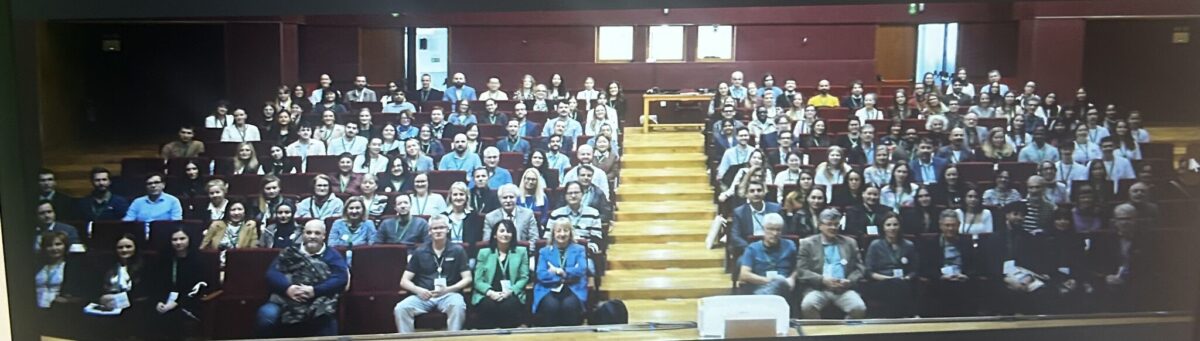
From 23 to 25 November 2025, the 25th European Meeting on Environmental Chemistry (EMEC25) took place in Chania, Crete (Greece), bringing together leading experts in the field of environmental chemistry. The international conference gathered 184 participants from 36 countries, featuring an extensive scientific program with 3 Plenary Lectures, 13 Keynote Lectures, 36 Oral Presentations, 31 Flash Presentations and 94 Poster Presentationsa clear validation of the event’s high scientific competence and growing global relevance.

Among the invited speakers was Prof. Fabiana Arduini from the University of Rome Tor Vergata, a key partner in RELIANCE. As a Keynote Speaker, Prof. Arduini delivered a lecture titled “Paper-based electrochemical (bio)sensors for sustainable analyses in the environmental sector,” showcasing the innovative research carried out by her group on sustainable sensing platforms.

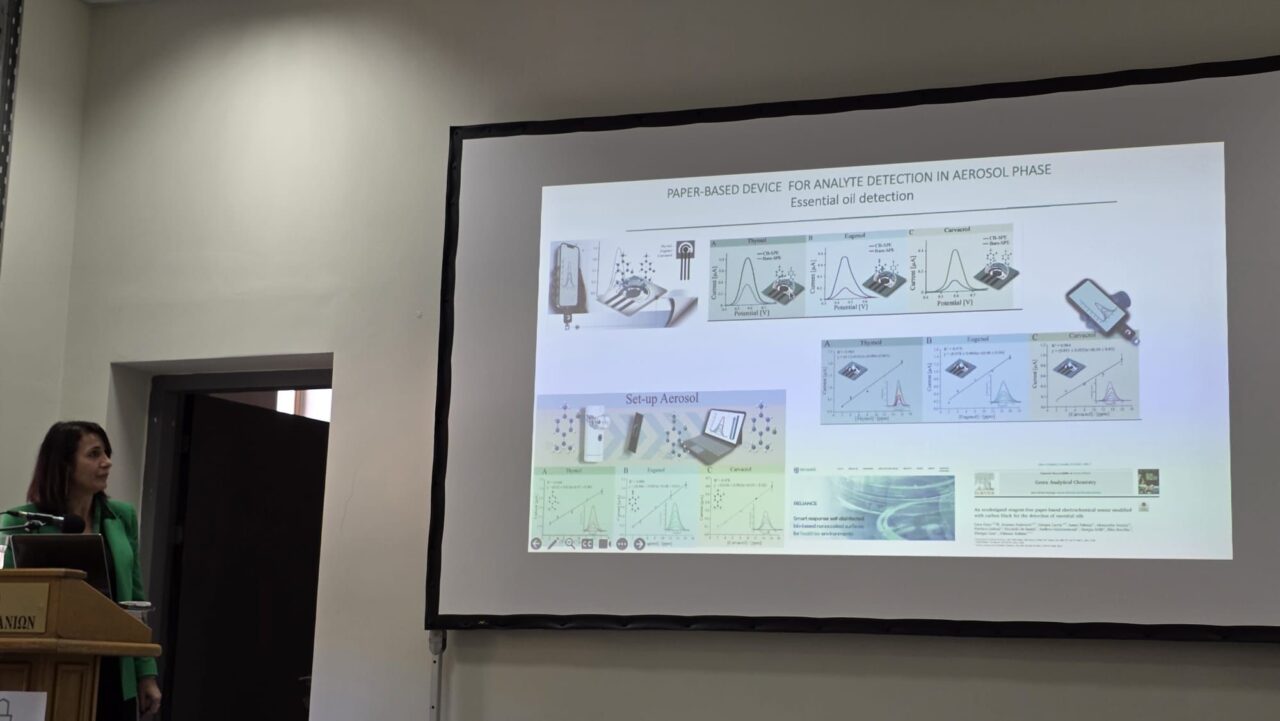
During her talk on 24 November, Prof. Arduini presented advances in paper-based electrochemical devices, detailing their structure, functionality, and broad application potential. Thanks to the porous nature of paper and its compatibility with printing technologies, her team develops sensors that integrate multiple analytical functionalities directly into a low-cost, lightweight, and easily manufactured substrate. This approach enables on-site environmental analysis, minimizing sample handling, reducing procedural complexity and improving access to real-time monitoring across diverse environmental matrices.

A highlight of the presentation was the demonstration of a reagent-free printed electrochemical sensor, modified with carbon black nanomaterial, capable of detecting essential oils across liquid, solid and aerosol samples. By leveraging the intrinsic porosity of paper, the sensor incorporates the necessary reagent and manages microfluidics without external pumps or additional sampling systems – showcasing a powerful example of sustainable sensor engineering.

Prof. Arduini’s contribution to EMEC25 enriched the scientific discussions and underscored the relevance of RELIANCE research activities in advancing next-generation analytical tools that could also be applied in environmental monitoring. Her keynote highlighted how paper-based electrochemical sensors open new pathways for simple, portable and sustainable analyses – offering unprecedented applications, such as the detection of essential oils in complex environments.

The participation of Prof. Arduini and her team demonstrated their commitment to pushing the boundaries of environmental sensing and to supporting Europe’s transition toward more sustainable and accessible analytical technologies.