

Categories
Blog News

A Safety-By-Design Approach for Human Hazard Evaluation of Bio-Based Self-Disinfecting Nano-Coatings

RELIANCE develops bio-based nanoparticle formulations with effective antimicrobial properties against a broad spectrum of pathogens, while ensuring safety for humans and the environment. The work activities within work package 7 of the project comprise a hazard evaluation to support the development of safe and sustainable products. Human hazard assessment is done through an oriented Nanotoxicology testing-based strategy, guided by a report of the regulatory requirements expected in respect of the developed formulations and product applications. Efforts are made for integrating new concepts and methodologies such as “One Substance One Assessment” and New Approach Methodologies (NAMs).

Methodology

Through a regulatory toxicology evaluation, partners from INERIS identified textile (including textiles for medical applications), food contact materials and potential worker safety (under REACH/OSHA) regulations to be prioritized when considering product formulations and applications. Based on these regulations, biocompatibility (ISO 10993), cytotoxicity, skin and eye irritation/sensitisation, inhalation exposure risk assessment and leaching (ISO 15181) are among the most of concern endpoints, in respect to potential human exposures. Genotoxicity may not be required since the individual compounds are not listed as genotoxic.

A testing strategy based on a safety-by-design approach with a tier 1 (in vitro) and a tier 2 (in vivo) was then chosen. Nanocoating components and the final formulations used for the manufacturing of the industrial products were both tested. Testing includes specific hazard categories such as skin and eye irritation (OECD TG 439,492), sensitization/allergy (DA 497, OECD TG 442), as well as potential inhalation hazard, including in vitro using Air liquid interface (ALI) exposures. These advanced in vitro methods have demonstrated good reliability for predicting the acute pulmonary toxicity of nanoparticles[1]). Hazard evaluation of final products such as treated fabrics is also performed (ISO 10993-5:2009). Potential risks of sub-chronic pulmonary toxicity, including toxicokinetic evaluation, is assessed using in vivo methods. In vivo experiments are conducted if long-term effects are suspected, as such effects (e.g., allergies) are particularly difficult to assess using NAMs in the case of particle exposures[2] (Wareing et al. 2024).

Results

Components and final formulations were tested. The bio-based self-disinfecting nano-coatings did not show any irritation for the skin or eye potential according to OECD TG 439 and 492. In vitro testing of lung alveolar cells in co-culture with macrophages both in submerged and at the ALI highlighted some mild cytotoxicity at high doses with SMIN, Cu-SMIN, Cu-SMIN-Carvacrol. More toxicity is observed when polyDMAEMA is added to the formulation for a controlled release of the essential oil carvacrol. Although, SMIN and Cu-SMIN did not induce any inflammation, addition of Carvacrol and poly-DMAEMA to the formulation did induce inflammation. Although some effects are observed on lung cells, treated fabrics with all the different components and formulations listed above did not induce any cytotoxicity (ISO 10993-5:2009). The testing strategy and preliminary results are summarized in the figure below (Figure 1).
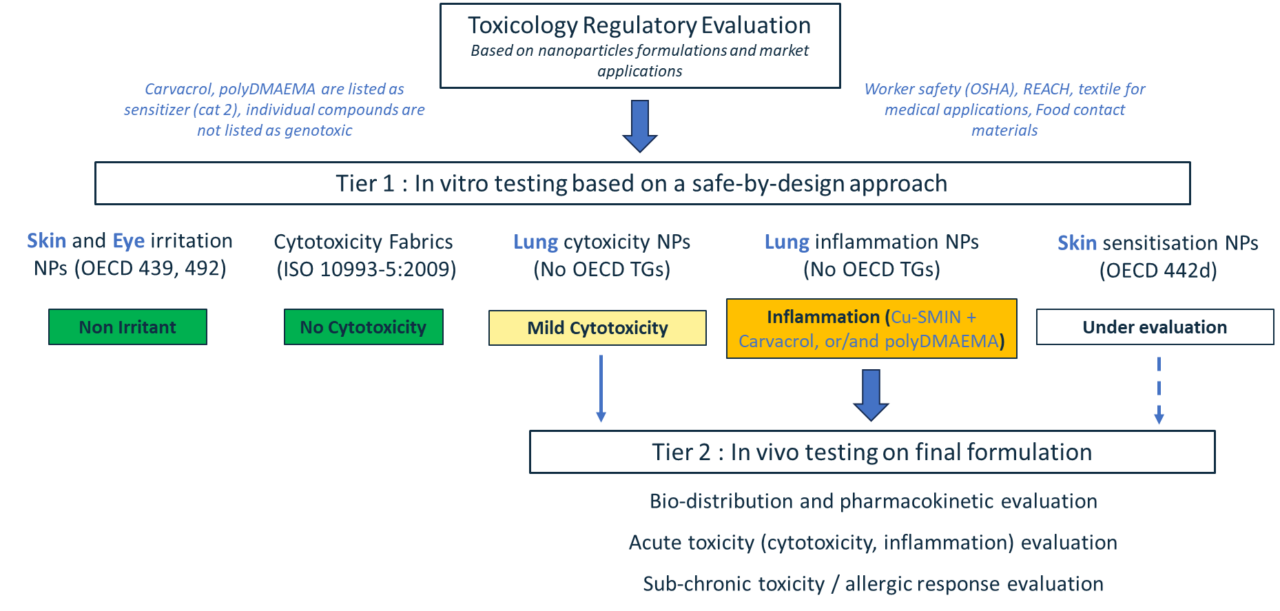
Figure 1. Nanotoxicology evaluation performed within RELIANCE.

Conclusion and Perspectives

The nanotoxicology evaluation is still ongoing. Based on the reported results, further testing is required to ensure product safety which includes sensitisation assessment in vitro and testing in vivo. These new results will be released shortly and will support a potential regulatory dossier for the usage of the developed Bio-Based Self-Disinfecting Nano-Coatings.

Contributor: INERIS


[1] Loret, T., et al. Predicting the in vivo pulmonary toxicity induced by acute exposure to poorly soluble nanomaterials by using advanced in vitro methods. Part Fibre Toxicol 15, 25 (2018). https://doi.org/10.1186/s12989-018-0260-6

[2] Pomar-Portillo, V., et al. “Methods and tools for the safety assessment part of the European Commission’s safe and sustainable by design framework when applied to advanced materials. Environ Int 109904 (2025). https://doi.org/10.1016/j.envint.2025.109904
Categories
News

EXPANDING CHEMISTRY: Third-Year Meeting of the MUR Excellence Program 2023–27

On 18 December 2025, the Department of Chemical Sciences and Technologies at the University of Rome Tor Vergata hosted the Third-Year Meeting of the MUR Excellence Program 2023–27, X-CHEM – Expanding Chemistry. The seminar brought together doctoral students, researchers and senior academics for a full day of scientific exchange, offering a snapshot of the diversity, ambition and collaborative spirit shaping contemporary chemical research.

Held within the framework of the Italian Ministry of University and Research (MUR) Excellence Program, the meeting served not only as a progress review of the X-CHEM initiative, but also as a lively platform for dialogue across disciplines and career stages. Throughout the day, participants moved seamlessly between formal presentations and informal discussions, reflecting on how individual research projects connect to broader scientific and societal challenges.

A central highlight of the programme was the invited lecture by Professor Graça Vicente from Louisiana State University. In her talk, “Synthesis and Functionalization of Hydrazine Inserted BODIPY Derivatives”, Professor Vicente presented innovative strategies for expanding the functional versatility of BODIPY compounds through hydrazine insertion. By clearly illustrating how targeted molecular modifications can open new application pathways, the lecture demonstrated both scientific depth and pedagogical clarity. The presentation resonated strongly with the audience, offering insights that were accessible and stimulating for early-stage researchers as well as more experienced scientists.

Following the plenary session, attention shifted to the work of PhD candidates through a dedicated poster session, which formed the interactive core of the meeting. Doctoral students presented their ongoing research across a wide range of chemical sub-fields, transforming the poster hall into a space of intense exchange. Moving between posters offered participants a condensed overview of emerging research directions, while extended conversations allowed for deeper technical questions and constructive feedback.

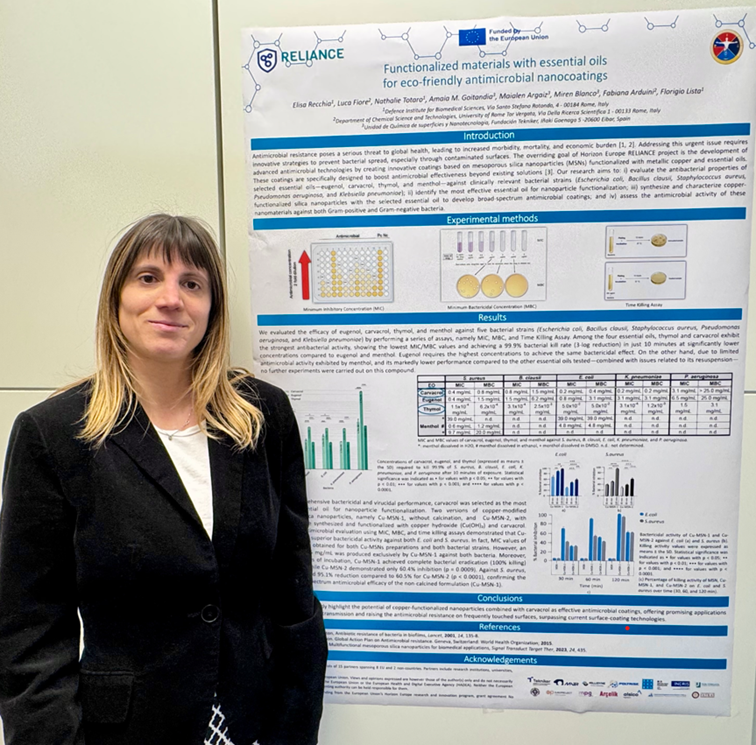
Among the contributors, representing RELIANCE, was Elisa Recchia from the University of Rome Tor Vergata, who presented work on next-generation antimicrobial coatings based on mesoporous silica nanoparticles (MSNs). Her research addresses one of the most pressing global challenges in chemistry and materials science: the development of effective strategies to combat antimicrobial resistance.

In her study, she presented a performance comparison of four essential oils – eugenol, carvacrol, thymol and menthol – against five clinically relevant bacterial strains, including Escherichia coli, Staphylococcus aureus, Bacillus clausii, Staphylococcus aureus, Klebsiella pneumoniae and Pseudomonas aeruginosa. The results identified thymol and carvacrol as the most effective antibacterial agents. Building on both antibacterial and virological data, carvacrol was selected for functionalization with two copper-modified MSN systems, distinguishing between calcined and non-calcined formulations. The findings highlighted the superior broad-spectrum efficacy of the non-calcined copper-modified MSNs (Cu-MSN-1), underlining their strong potential for future antimicrobial surface technologies in line with RELIANCE’s objectives.

The poster session was particularly enriching, as it offered the chance to discover several research projects closely related to Elisa’s own PhD work, while also highlighting complementary and innovative approaches. Several contributions explored nanoparticle-based systems, albeit from complementary angles, including surface  functionalization strategies, alternative antimicrobial agents and advanced physicochemical characterization methods. The sparked discussions were extremely valuable, as they opened the door to possible future integrations, illustrating how interdisciplinary dialogue can accelerate innovation and strengthen individual research efforts.

Beyond the scientific content, the Third-Year Meeting stood out as a space for reflection on the role of collaboration in excellence-driven research programmes. The diversity of approaches presented underscored how progress in chemistry increasingly depends on the ability to connect ideas across sub-disciplines, institutions and application domains. In this sense, the meeting embodied the core values of the X-CHEM Excellence Program: fostering quality, openness and meaningful exchange.

As the seminar concluded, participants left with new perspectives, potential collaborations and a renewed sense of motivation. Events such as this not only showcase scientific results but also reinforce the importance of community in addressing complex challenges – from fundamental molecular design to applied solutions for public health and environmental sustainability. For RELIANCE and its partners, the meeting offered both visibility and inspiration, reaffirming the value of contributing to shared European research goals within a vibrant and expanding chemistry landscape.

Contributor: Elisa Recchia, UNITOV